By: Nazifa Haqpal/ Journalist/ Author/ Former diplomat
Pakistan’s Security Crisis and Its Implications for Asylum Claims
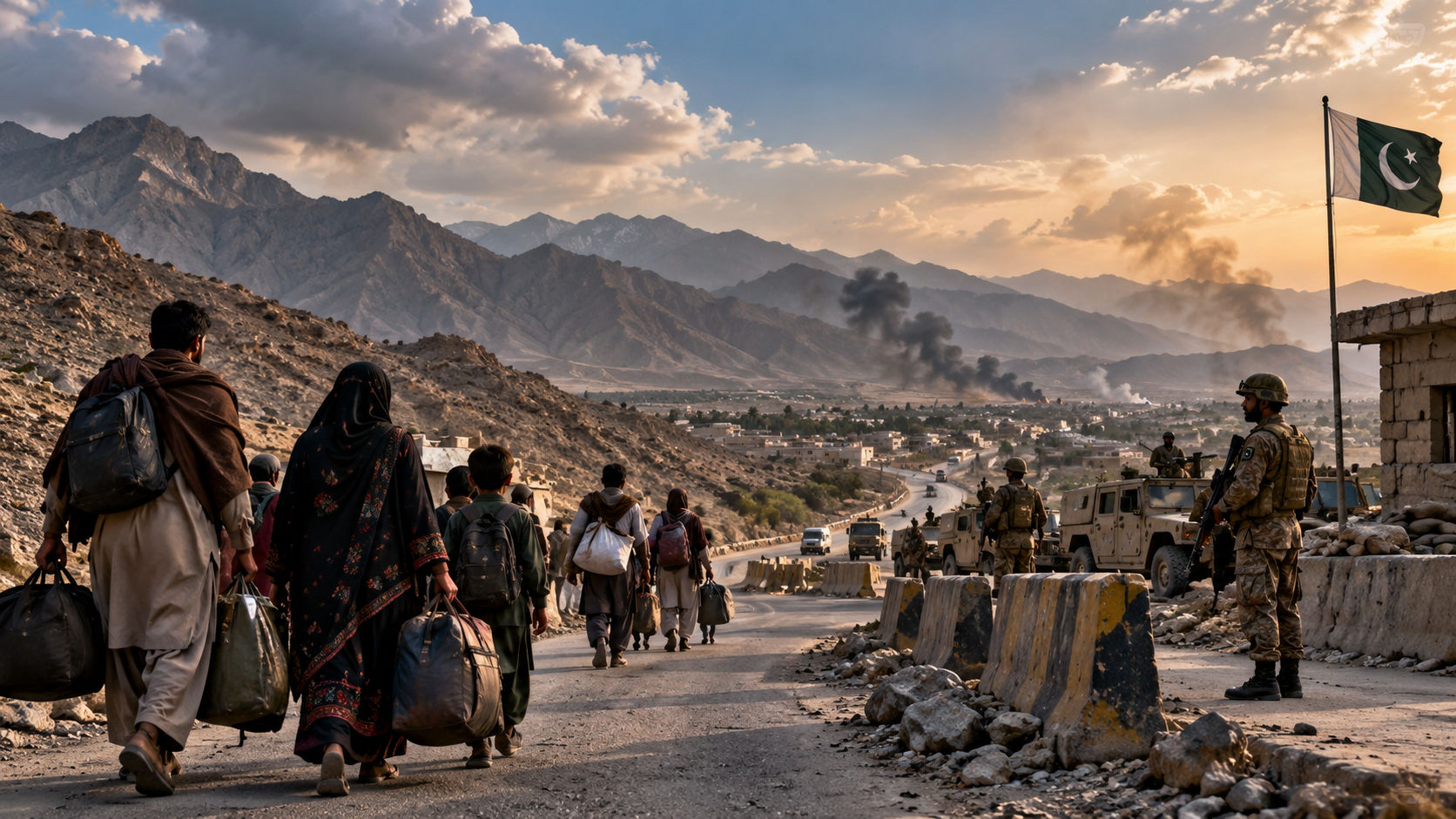
Pakistan’s security situation deteriorated sharply during the second half of 2026, particularly in Balochistan and Khyber Pakhtunkhwa (KP). Separatist insurgency, Islamist militancy and intensified security operations have contributed to some of the country’s highest levels of violence in recent years. The Centre for Research and Security Studies (CRSS) recorded an 83% quarter-on-quarter increase in violence-linked fatalities during Q3 2026, with Balochistan experiencing the steepest rise. [1]
International reporting reflects the same trend. Reuters documented coordinated attacks by Baloch separatists, major military operations and deadly incidents claimed by the Balochistan Liberation Army (BLA). [7] [8] Associated Press has also reported attacks and counter-insurgency operations in Balochistan, while violence in KP highlights the continuing threat posed by the Tehreek-e-Taliban Pakistan (TTP). [9] [10]
For the UK, these developments provide increasingly relevant country context for asylum claims. However, worsening security does not automatically establish entitlement to refugee protection.
A Sharp Rise in Violence
CRSS recorded 1,415 violence-linked fatalities and 558 injuries across at least 385 incidents between July and September 2026. Compared with 774 fatalities in Q2, this represented an 83% increase—the largest quarterly rise recorded by CRSS since 2021. [1]
Balochistan and KP together accounted for approximately 98% of these fatalities. Balochistan recorded 829 deaths across 186 incidents, almost 59% of the national total and an increase of approximately 213% from the previous quarter. KP recorded another 556 fatalities across 173 incidents, accounting for around 39%. [1]
These figures include deaths arising from both militant attacks and security operations and should not be interpreted as civilians killed exclusively by militants. They nevertheless demonstrate the exceptional intensity and geographical concentration of Pakistan’s current violence. Early 2026, the BLA launched coordinated attacks across several locations in Balochistan. Reuters reported that these were followed by a week-long counter-insurgency campaign, with Pakistan’s military saying that 216 militants had been killed. [7]
Pakistani forces also deployed helicopters and drones to regain control of Nushki after BLA fighters temporarily occupied government and other buildings. [11] In May, more than 30 people were killed in a train bombing in Quetta, according to provincial officials cited by Reuters. The BLA claimed responsibility. [8] By September, reports indicated that violence was spreading into Pashtun-majority areas of Balochistan that had previously been less affected by the separatist insurgency. [12]
The conflicts in Balochistan and KP differ, however. In KP, much of the militant threat is associated with the TTP and affiliated groups. In September, a suicide vehicle bombing at a police checkpoint in Dera Ismail Khan killed at least 12 people and injured around 35. The TTP claimed responsibility. [10]
The conflict is also linked to deteriorating relations between Pakistan and Afghanistan. Islamabad accuses Afghanistan’s Taliban authorities of allowing TTP militants to operate from Afghan territory, an allegation Kabul denies. The dispute has contributed to cross-border military escalation and Pakistani strikes inside Afghanistan. [13]
Balochistan, by contrast, faces a longstanding separatist insurgency. The BLA seeks an independent Balochistan and has targeted security forces, infrastructure and Chinese-linked interests. [8] [14]
Human-Rights Concerns
Balochistan’s relevance to asylum claims extends beyond armed violence. Human-rights organisations have raised concerns about enforced disappearances, arbitrary detention, alleged extrajudicial killings and the treatment of activists and perceived government critics.
Amnesty International has documented concerns about enforced disappearances and restrictions affecting Baloch activists. [15] In June 2026, Amnesty criticised the convictions and life sentences imposed on activists Mahrang Baloch and Sibghat Ullah Shah Jee, raising concerns about due process and fair-trial standards. [16] Human Rights Watch has separately reported allegations involving arbitrary detention, extrajudicial killings and restrictions affecting protests and communications. [17]
These reports do not establish that every Baloch resident or activist faces persecution, nor should peaceful political activism be equated with armed separatism. They may, however, provide relevant country evidence when assessing claims involving detention, disappearance, questioning or alleged adverse interest from state authorities.
Implications for UK Asylum Claims
Pakistan was among the six largest nationalities claiming asylum in the UK in the year ending June 2026. Together with Eritrea, Iran, Sudan, Afghanistan and Bangladesh, these nationalities accounted for 46% of asylum claimants. Overall, 85,891 people claimed asylum during the period, 21% fewer than in the previous year. [2]
It would therefore be premature to suggest that Pakistan’s recent security deterioration has already increased asylum applications. Home Office figures cover the year ending June 2026, while the sharp escalation documented by CRSS occurred between July and September. [1] [2] Existing statistics cannot establish whether Q3 violence has caused—or will cause—an increase in Pakistani applications.
Nevertheless, the deterioration provides important country-of-origin information, particularly for claims involving Balochistan and KP.
State Protection, Relocation and Alleged BLA Links
Cases involving actual or perceived links to the BLA may be particularly complex. An applicant may claim that Pakistani security or intelligence authorities consider them a member or supporter, even where the alleged association is disputed or imputed. Relevant evidence could include previous detention, questioning, arrest warrants, threats, raids, surveillance, political activities or the detention or disappearance of relatives.
The identity of the alleged persecutor is crucial. Where harm is feared from a private individual or non-state organisation, the Home Office may consider whether Pakistani authorities can provide sufficient protection. Where persecution or serious harm is alleged to come from state authorities themselves, Home Office guidance indicates that effective protection from those same authorities is unlikely. [4]
Internal relocation is another consideration. Depending on individual circumstances, Home Office guidance indicates that a person fearing a non-state or rogue-state actor may be able to relocate elsewhere in Pakistan. [5] Severe insecurity in Balochistan or KP therefore does not automatically establish that relocation elsewhere is impossible.
However, the analysis may differ if the alleged persecutor is a national security or intelligence body capable of operating beyond the applicant’s home province.
Actual involvement with the BLA may also raise exclusion issues. Article 1F of the Refugee Convention provides for exclusion from refugee protection in specified circumstances involving serious acts, with Home Office guidance emphasising personal responsibility for relevant conduct. [6]
Careful distinctions are therefore essential. A peaceful Baloch activist is not equivalent to a BLA fighter; being related to a suspected member does not establish membership; and someone falsely accused of supporting the BLA is in a different position from a person who directly participated in serious violence.
Conclusion
Evidence available by October 2026 points to a substantial deterioration in Pakistan’s security environment. CRSS recorded an 83% quarterly increase in violence-linked fatalities, with Balochistan experiencing an increase of approximately 213%. [1] International reporting has documented BLA attacks, TTP violence, suicide bombings and extensive security operations, while human-rights organisations continue to raise concerns about disappearances, detention and the treatment of activists.
This does not mean that every person from Balochistan or KP qualifies for asylum, or that everyone accused of BLA association is entitled to refugee protection. Instead, the deteriorating security situation provides the broader country context against which individual claims must be assessed. Ultimately, Pakistan’s security crisis provides the wider context. An applicant’s individual history, risk profile and supporting evidence remain central to determining whether that wider conflict gives rise to a need for international protection in the United Kingdom.